

Review of William Cheung's Wing Chun Kung Fu DVD 1
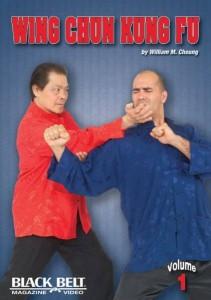
Customer/3rd Party Review: This review was done by a customer/3rd party and is listed here for you reference only. The views and opinions of the reviewer are not those of Everything Wing Chun and do not necessarily reflect EWC's views or opinions on the subject matter. It is posted, like all customer reviews, to give you more info on the product and to give you different opinions on a product so that you can make the best decision for yourself about its content. The review is NOT by an EWC employee or contractor and EWC cannot stand by anything said in any customer/3rd party review. Enjoy!
Review of: Wing Chun Kung Fu by William Cheung – Volume 1
Reviewer: George P Hernandez
DVD Bought on: Everything Wing Chun : http://www.everythingwingchun.com/william-cheung-wing-chun-dvds-books-s/220.htm
Technical Specifications:
- Participants: William Cheung, Eric Oram
- Director: Dan Ivan
- Format: Color, DVD, NTSC
- Language: English, no subtitles.
- Region: 1
- Aspect Ratio: 1.31.1
- Disks: 1
- DVD Video, MPEG Mbps 1: LPCM 48 KHz/16bit -Mbps 1080/60i
- Length: 1 hour
Rating: 4 Stars (out of 5).
What it's about:
A brief introduction of the Wing Chun Linage is given, William Cheung and his association with Bruce Lee, demonstrations of Si Lim Tao and the Chum Kil forms; the first two forms of the Wing Chun fighting system. Wing Chun basics are presented along with defense techniques including drills incorporating empty hand forms and foot work. A basic presentation of a Chi Meditation standing posture, showing the position of the hands with a description of its purpose and relationship to the median acupuncture system and the flow of Chi energy.
Comments:
The first part of this DVD is narrated by Eric Oram, William Cheung's Wing Chun assistant and demonstrator; he is also featured in the subsequent volumes of this five volume DVD set. Sifu Oram introduces, William Cheung as the current Grand Master of the "Traditional" Wing Chun System, who at the time of this DVD production had forty years of teaching experience and is the author of many articles and books published on Wing Chun Kung Fu. Furthermore, Sifu Oram presents Grand Master Cheung, as 8th generation and direct linage holder of Wing Chun founded by a Buddhist Nun of the Shaolin Temple, who is historically known as Ng Moi. However, there is no mention of Ip man and his connection with the former grand master in this short biographical narrative given by Sifu Oram. William Cheung's relationship with Brue Lee is described as Lee's senior and first principle teacher, where he had taught him the techniques he used in many of his martial art movies produced during his legendary film career.
For those students, who are studying and learning the "Traditional Wing Chun System" under the auspices of William Cheung, will find this first DVD volume as an excellent instructional piece. Care is taken to show the first form in normal speed and in slower form so the beginning student can readily understand the sequence, consistency and flow of movement.
The Si Lim Tao form applications are separated into numerous segments emphasizing the use of the basic hand forms and associated footwork. This approach gives the student time to assess the relevant position of the hands, their relationship to the opponent's center line as they are applied during each technique. All techniques are shown at least times on both sides of the body or as it would appear from a right or left position.
Critical in the successful use of these basic techniques, is maintaining control of the opponent's elbow, its leading arm while moving to the blind side. William Cheung explains in detail his system of fighting strategy, which he refers to as B.O.E.C or Balance, Opening, Elbow and Cross arms. He demonstrates how this approach gives a Wing Chun fighter a definite advantage, particularly when it becomes necessary to use a trapping hand; a classic Wing Chun maneuver which is not expected by an opponent attempting to counter within a close exchange of fighting hands. The first forty minutes of volume one is spent on Si Lim Tao, which sets the foundation for the more complex movements of the second and third forms.
The demonstration of the system's second form, "Chum Kil" is done in somewhat in the same fashion as Si Lim Tao, showing the essential aspect of closing the gap between one's opponents. For example, more complex movements and techniques begin to emerge as footwork closes the gap while using various techniques employing a front kick followed with Jet Sao and palm strike sequences. Various combinations are shown using not only damaging kicks to the knees, but also the use of striking points or hitting pressure points to further disable an opponent's response capability. William Cheung shows you where to hit the wrist and arms using these striking points to your advantage.
Unfortunately, when you're towards the DVD's conclusion, one has the feeling that an equal amount of time should have been given to the second form and its applications. But in that being said, once you understand the techniques used in the first form you can also combine and use in the second, which will give techniques.
The DVD concludes with basic instruction on Chi Meditation. You are shown a basic standing posture, how one connects the two meridian points using the tongue and the placement of the arms and hands in relation to the chest. The position of the hands is somewhat like holding a small barrel or hugging a tree. The practitioner is also shown a simple method of testing one's practice by slightly moving the hands toward each other. During this slight movement of the hands one may experience a tingling feeling, evidence that indeed something is happening. This basic Chi Meditation technique is essential for developing a sense of "courage," focusing and calming the mind.
Special In Depth Content Over View: William Cheung Wing Chun Kung Fu – Volume One
- Introduction
- William Cheung's Wing Chun Linage –Grand Master
- Ng Moi
- Bruce Lee
- William cheung's – Health & Chi Mediation Therapy
- William Cheung introduces his assistant demonstrator
- Eric Orem – narrates the DVD introduction.
- Si Lim Tao Form
- William Cheung –Front View- Full Frame Shot
- Eric Oren- Left of William Cheung at 45 degree angle/within the same frame as Cheung
- Si Lim Tao performed in unison
- Narration: Eric Orem-first form
- Stances
- Body Movements
- Proper Breathing
- Concentration
- Balance
- Training internal energy
- Independent use of limbs
- Body coordination
- Si Lim Tao Form – Second Demonstration
- William Cheung – complete from at a slower pace.
- Front view – Med. Frame Shot
- Hand position and movements
- Speed of practice
- Position of elbow
- Concentration of forward energy
- Contribution to Chi Sao practice
- Slim Tao Form – Third Demonstration
- Side view – posture and movement –
- 45 degree angle/med. Frame shot.
- Si Lim Tao Opening –First Part
- Wu Sao/Fook Sao sequence
- Beginning of Second Part
- Gum Sao
- Rear Palm movements - Backside
- Double Lan Sao
- Double Jet Sao
- Closing Sequence of Second Part
- Beginning of Third part
- Pac Sao Sequence
- Bong Sao Tan Sao sequence
- Grab release sequence – Closing
- Wing Chun Kung Fu Basics
- Basic Blocks
- Pac Sao
- Pac Sao/punch (chuan)
- Footwork – right side and left side
- Counter punch-half step to right and left
- Variation Pac Sao, counter punch high
- Movement of Tao Sao hand
- Tao Sao Counter Attack with Chuan hand (fist)
- Bil Sao right and left side
- Bil Sao Lap Sao combination
- Bil Sao Chuan hand/ with footwork - right and left side
- Basic Blocks
- Defense Against Vertical Punch
- Grand Master Cheung/Eric Orem- Demonstrating
- Vertical punch/Pac Sao – Chi Sao –Punch/Blind side
- Application of B.O.E.C strategy
- Same technique demonstrated form a reverse angle
- Defense Against Round Punch
- Round Punch-inside Lan Sao - punch with the right/left, check elbow-step to blind side-push back opponents head follow up with punch to the throat.
- Reverse Angle – Same Technique –Round Punch – with slower movements.
- Variation on the Round Punch
- Bil Sao – Huen Sao – check elbow, punch three times, while checking elbow, push back the head and open target area and punch at the throat.
- Defense against low punch
- Gum Sao left with simultaneous right punch
- Cross Gum Sao left arm downward - Huen Sao hand
- Reverse angle of same technique.
- Defense against Jab/back fist
- Block Jab – Pac Sao –Jam the Back Fist – pull the opponent back, follow up – multiple punches to the head and along the spine.
- Reverse angle of same technique
- Defense against front kick
- Step back and block with Gum Sao
- Kick at opponent's med section.
- Check the arm – follow up with multiple punches on the blind side.
- Reverse angle of same technique
- Defense against lead punch
- Bil Sao against the lead punch
- Check the elbow with the cross hand with a kick to the ribs
- Control the elbow and follow up with multiple strikes to the head, while controlling the blind side
- Reverse angle of same technique
- Combinations
- Roll punch and stepping forward
- Three punches with the lead fist
- This drill is done on both right and left sides
- Technique shown directly from a right side angle
- Numeric punch or chain punching.
- This is done with various sequences of punching combinations.
- Side view of technique
- Step forward - two level punching
- Step forward – strike high – two low- then high again.
- Side View of combination punching
- Bil Sao and Front Kick Combination
- Side View of technique
- Right and Left side demonstrations of technique
- Pak Sao and Front Kick Combination
- Pak Sao
- Kick
- Punches to the head then return to original stance.
- Side view of application
- Lap Sao and Front Kick combination
- Lap Sao – Wu Sao hand
- Kick
- Follow-up with three punches and return
- Side view of application
- Footwork
- Right and left side stance movement
- Neutral stance and half- step movement right laterally lateral movement to the right and stepping back laterally.
- Forward movement same attack and retreat pattern
- Half-step back and forward at an angle
- Full side side step with lateral motion to right and left side
- Chum Kil - Second Form – First Demonstration
- William Cheung – Full Frame Shot
- Introduction – Sifu Eric Orem
- Searching for the bridge or bridging the gap
- The footwork form
- Complete form at normal speed.
- Chum Kil – Second form – Second Demonstration
- William Cheung – Full Frame shot – Slower Pace
- Opening –same as Si Lim Tao
- Double Bil Jee Strike
- Triple Bong Sao Sequence
- Front Kick and Arm Break
- Jet Sao Palm Strike Sequence
- Lap Sao and Front Kick
- Bong Sao and Lap Sao Sequence
- Sequence is repeated on the opposite side of the body
- Lap Sao and Front Kick
- Three Bong Saos
- Pao Sao – Low Palm Strike
- Sequence repeated on the opposite side of the body
- Bil Sao – low side kick- followed by three low Bong Sao
- Double Palm Strike
- Sequence repeated on the opposite side of the body
- Triple Gum Sao and closing punches.
- Chamber hands – Neutral Stance and close.
- Chum Kil Applications
- Eric Oren - Bil Jee Strike
- William Cheung shows application of double Bil Jee Strike
- Bong Sao – Jet Sao – Kick - Arm Break
- Lap Sao – Kick – Lap Sao
- Reverse Lap Sao- Kick – Lap Sao – lower palm strike
- Bil Sao – Lower Kick to the Knee – Lower Bong Sao – Double
- Palm Strike.
- Chi Meditation
- Standing Posture
- Arms out and held in a Circle
- Fingers tips aligned with shoulders
- Placement of tongue – connecting the meridians
- Breathing slow
- Median of fingers relating to internal organs
- Benefits of meditation practice, i.e., stress reduction.
- Introduction
other blogs by user